
Introduction Story
The first time I put together a grazing platter instead of the traditional charcuterie board, it was for a casual summer gathering with friends. I wanted something that felt more relaxed, colorful, and abundant—something that encouraged everyone to dive in without ceremony. Instead of focusing mainly on meats and cheeses, I filled the table with fresh fruit, crisp vegetables, dips, nuts, chocolate, crackers, and a few fun surprises. The result was a vibrant, overflowing spread that invited conversation and delighted every kind of eater. That afternoon taught me that grazing platters aren’t just about food—they’re about atmosphere, creativity, and generosity. They offer endless possibilities and welcome everyone to enjoy a little bit of everything.
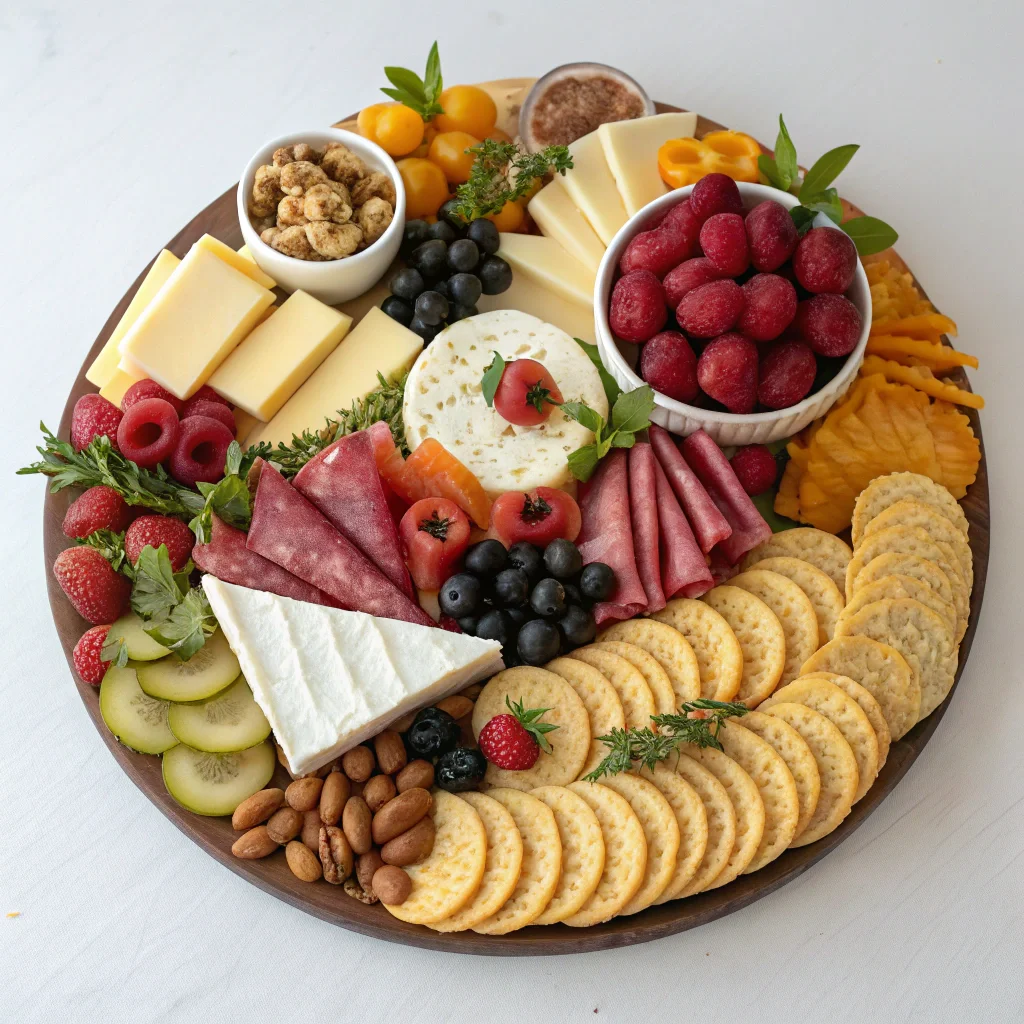
Grazing Platter
Ingredients
Equipment
Method
- Prepare all produce by washing, slicing, and arranging into small sections.
- Place dips in small bowls and position them around the board.
- Add crackers, nuts, and chocolate in open spaces, balancing textures and colors.
- Adjust placement until the board looks full and inviting. Serve immediately.
Nutrition
Notes
How to Make the Recipe (300 Words)
Creating a grazing platter instead of a charcuterie board is all about variety, abundance, and visual appeal. The key is to offer a wide range of flavors and textures so that every guest finds something they enjoy. Start by choosing a large board or even a clean tabletop lined with parchment paper. Grazing platters thrive on space, so don’t be afraid to go big.
Next, prepare your fresh produce. Wash and slice apples, cucumbers, and bell peppers. Leave berries and grapes whole for easy snacking. Arrange the produce in small clusters around the board, mixing colors to create a vibrant, inviting look. The natural beauty of fresh fruits and vegetables instantly makes the platter feel abundant.
Now focus on your dips. Hummus, yogurt dip, or even guacamole work beautifully. Place each dip into a small bowl and scatter them throughout the board. This encourages guests to explore the entire spread and keeps similar items from grouping too closely together.
For snacks and extras, use crackers, nuts, and a bit of chocolate to add crunch and contrast. Place these items in the spaces left between the produce clusters. Crackers help balance the dips, while nuts offer savory depth. Chocolate pieces add a fun treat and pair surprisingly well with fruits like berries and grapes.
As you place each item, step back and look at the overall balance. A good grazing platter should feel full, colorful, and slightly overflowing without looking messy. Fill any gaps with small items like nuts or chopped fruit. Finally, add optional extra touches such as olives, cheese cubes, dried fruit, or small sandwiches to create even more variety.
Once assembled, serve immediately and let guests enjoy a little taste of everything at their own pace. Grazing platters turn snacking into an experience—relaxed, generous, and beautifully communal.
Conclusion (100 Words)
A grazing platter is a refreshing, modern alternative to the traditional charcuterie board. Instead of focusing mainly on meats and cheeses, it embraces variety, color, and creativity. With fresh fruits, vegetables, dips, snacks, and sweet touches, it becomes a vibrant centerpiece that invites people to gather and enjoy food casually. It’s perfect for parties, picnics, holidays, or cozy nights with friends. Best of all, grazing platters can be endlessly customized to suit dietary needs and personal tastes. Whether simple or abundant, they transform any occasion into something warm, welcoming, and wonderfully delicious.