
Choosing the Right Surface for Entertaining
Whether you’re hosting a casual gathering or a formal dinner, presenting cheeses, meats, fruits, and accompaniments beautifully can elevate any event. The debate between using a charcuterie tray versus a board comes down to convenience, aesthetics, and versatility. Some hosts prefer the rustic charm and natural appeal of wooden boards, while others appreciate the practicality and compartmentalized options of trays. Understanding the differences can help you select the ideal surface for your next gathering, ensuring both style and functionality.
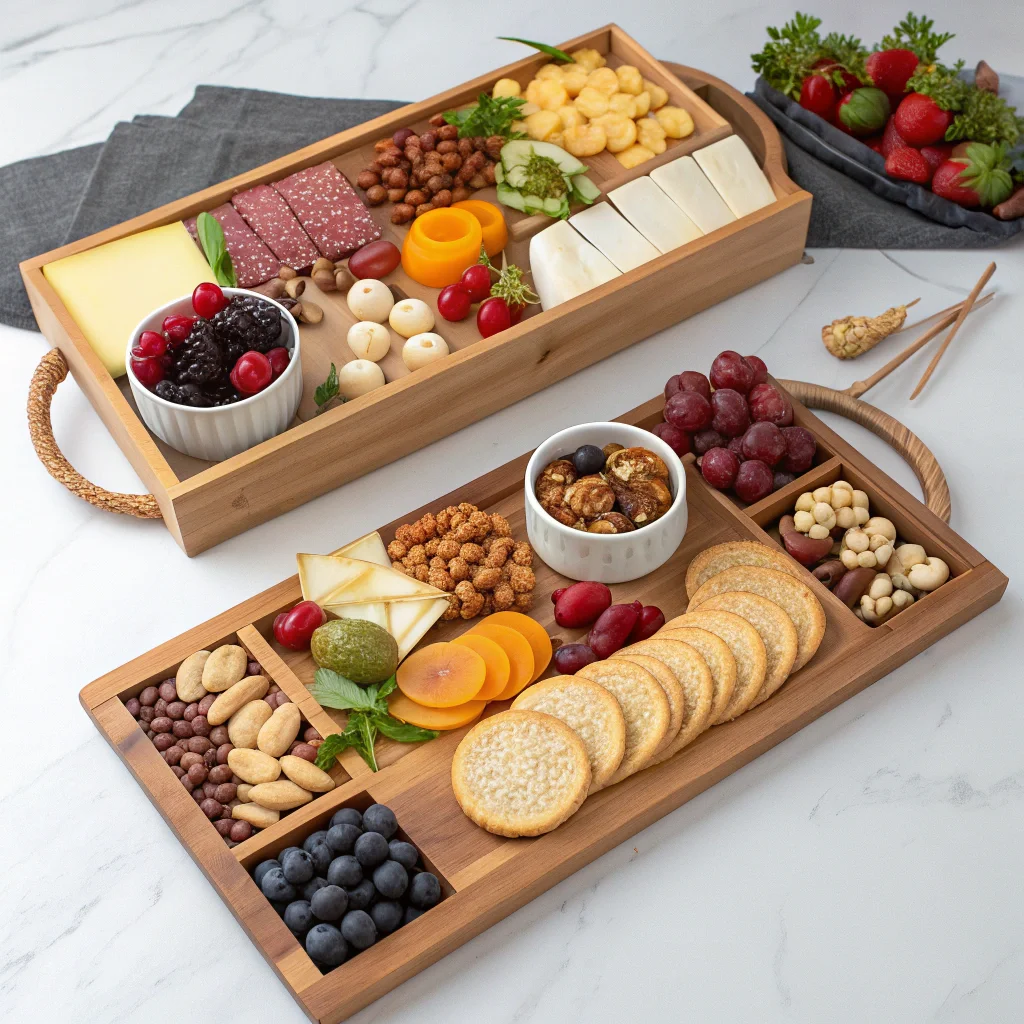
Classic Charcuterie Board
Ingredients
Equipment
Method
- Choose either a wooden board or tray, cleaned and ready for assembly.
- Arrange cheeses in different corners, leaving space for meats and fruits.
- Fold or roll sliced meats and place near cheeses.
- Add grapes, nuts, and crackers in small clusters to fill gaps.
- Serve with small bowls of honey or jam, and enjoy immediately.
Nutrition
Notes
How to Assemble a Charcuterie Board or Tray
Assembling a charcuterie presentation is both an art and a science. Begin by selecting your surface: a wooden board offers a rustic aesthetic and is excellent for direct contact with cheeses and meats, while a tray, often with compartments or edges, is practical for transport and portioning.
Start by arranging cheeses in different corners or sections, keeping firm and soft varieties separate for visual and textural contrast. Next, fold or roll thinly sliced cured meats like prosciutto or salami and place them strategically around the cheeses. Add fresh fruits such as grapes or berries to provide color, freshness, and natural sweetness that balance the richness of meats and cheeses. Nuts and crackers can fill empty spaces, creating texture and making the board look full and inviting.
For a polished presentation, include small bowls of honey, jam, or spreads. Trays with compartments make it easier to keep sticky or runny items contained, whereas a board may require careful placement. Both methods benefit from thoughtful arrangement: avoid overcrowding, and make sure colors and shapes are evenly distributed.
Ultimately, assembling a charcuterie board or tray involves layering flavors, textures, and colors while keeping accessibility in mind. Each choice—from surface to ingredient selection—affects the ease of serving and overall aesthetic.
Conclusion
Choosing between a charcuterie board and tray depends on your priorities: a wooden board emphasizes rustic elegance and natural beauty, while a tray offers practicality and easier cleanup. Both methods allow creativity in arrangement and ingredient selection. By understanding their strengths, you can tailor your presentation to suit the occasion, impress guests, and make serving effortless. With either option, thoughtful composition and quality ingredients ensure a visually stunning and delicious spread.
Toroloco777 sounds a bit crazy, right? The site is pretty colorful, and it’s got some fun slots. If you’re looking for something a bit different, give it a look. Look at this: toroloco777
Salaam everyone! Checking out 6777cxpakistan, let’s see if it’s got good odds. InshaAllah we all win! Check it out here 6777cxpakistan
Been using 66biolinks for a while now. Super easy to set up and manage all my links in one place. Highly recommend it! Check them out: 66biolinks