
A Simple Story to Get Started
The first time most people see a charcuterie board, it feels like something reserved for fancy parties or professional caterers. Rows of cheese, perfectly folded meats, and colorful fruits look almost too beautiful to touch. But the truth is, a great charcuterie board doesn’t require special training—just a little guidance and confidence. This tutorial-style approach, paired with a video, makes the process approachable for anyone. Whether you’re preparing for guests, date night, or a quiet evening at home, learning how to build a charcuterie board step by step turns an intimidating spread into a fun, creative experience you’ll want to repeat again and again.
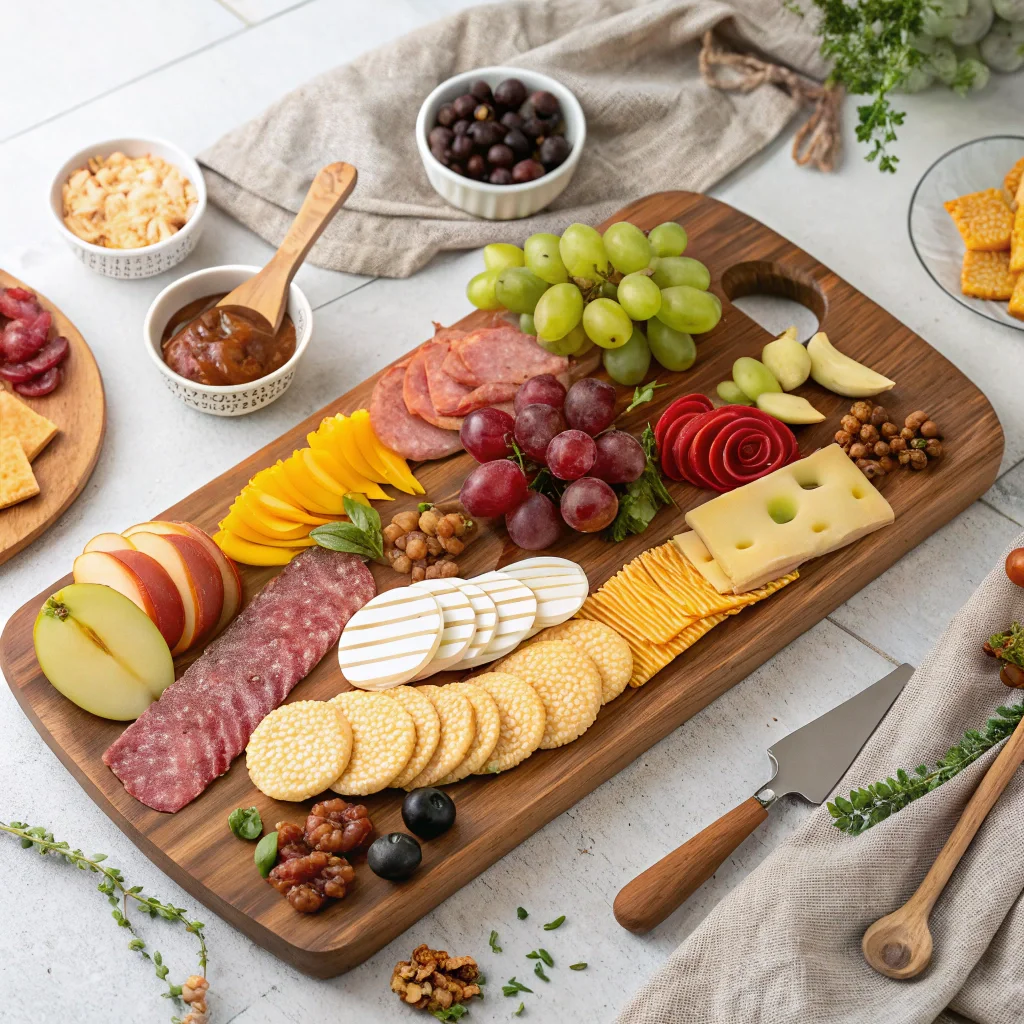
Simple Charcuterie Board
Ingredients
Equipment
Method
- Place cheeses on the board first, spacing them evenly.
- Add cured meats, folding or rolling them for visual appeal.
- Fill remaining spaces with crackers, fruit, and honey.
- Serve immediately or cover and refrigerate until ready.
Video
Notes
How to Make a Charcuterie Board Step by Step
Making a charcuterie board becomes much easier when you follow a clear process and use a video as visual support. Start by selecting your board. A wooden board or large platter works best, giving you enough space to arrange items without crowding. Set it on a stable surface where you can work comfortably.
Begin with the anchor items—usually cheeses. Place them first, spacing them out across the board. Cut some cheeses into slices or cubes while leaving softer cheeses whole to add variety. Next, move on to the meats. Instead of laying them flat, fold salami into quarters or gently roll prosciutto. This creates height and texture, which makes the board visually appealing.
Once meats and cheeses are in place, add crackers or bread. These are best placed near the cheeses, making it easy for guests to build bites. Then add fruits like grapes to introduce color and freshness. Fruits also help balance the richness of meats and cheeses.
Now focus on filling the gaps. Small items such as nuts, olives, or dried fruit are perfect for empty spaces and help the board look full and abundant. Step back occasionally and adjust placement as needed. The goal is balance, not perfection.
Finally, watch the video tutorial to refine your presentation. Videos are especially helpful for learning folding techniques and final styling touches. When finished, serve immediately or cover loosely until ready to enjoy.
Conclusion
A charcuterie board tutorial with video takes the guesswork out of creating a beautiful spread. By combining clear steps with visual guidance, anyone can build a board that looks impressive and tastes delicious. It’s a flexible approach that works for beginners and experienced hosts alike. With a little practice and creativity, charcuterie boards can become a go-to option for entertaining, casual gatherings, or even everyday snacking. Once you master the basics, every board becomes an opportunity to experiment and express your personal style.
Heard mixed reviews about pearl123bbr. Some say its fantastic others not so much what are your thoughts? See for yourself: pearl123bbr
Linkdubaicasino? Had some friends mention it. I hopped on last night, super smooth experience. Great selection and pretty decent odds. linkdubaicasino
Used the New88link to get through and it worked like a charm. No hitches, straight to the good stuff. If you need a reliable way to access, this is it. Find it here new88link