
Introduction Story
The first time I built a charcuterie board, I remember feeling overwhelmed by the endless varieties of meats, cheeses, fruits, and crackers. My board looked cluttered, mismatched, and far from the Instagram-worthy spreads I admired. A few months later, during a simple night in with friends, I tried something different—less food, more intention. I focused on clean lines, neutral colors, and thoughtful pairings. The result was unexpectedly stunning. A minimalist approach didn’t just look elegant—it made the flavors shine. That evening, with candles flickering and soft music playing, I learned that simplicity can be the most beautiful aesthetic of all.
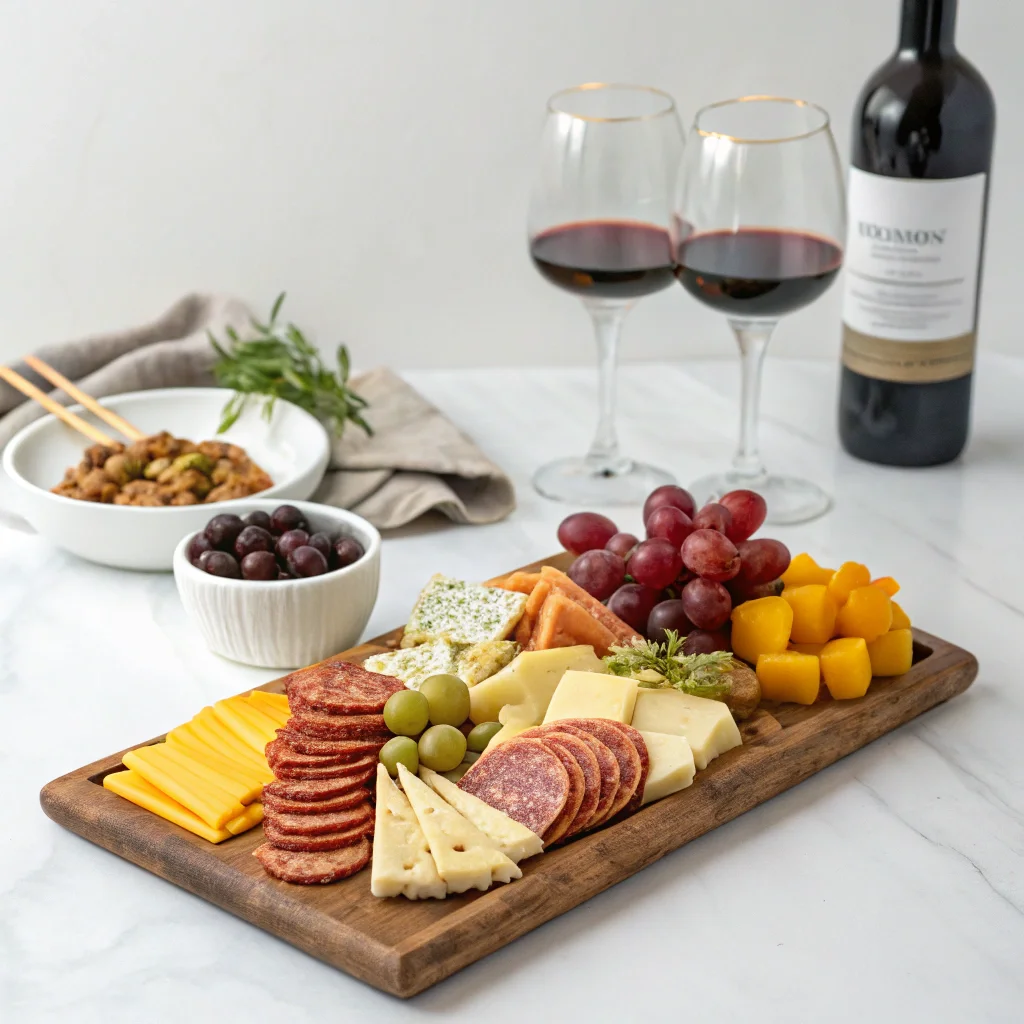
Minimalist Charcuterie Board
Ingredients
Equipment
Method
- Place cheeses on opposite ends of the board for balance.
- Fold prosciutto and create a small stack in the center.
- Add grapes in one clean cluster for a natural, minimalist touch.
- Scatter almonds in a controlled small pile to maintain clean lines.
- Fan the crackers neatly to complete the aesthetic.
Nutrition
Notes
How to Make This Recipe
Creating a minimalist charcuterie board is all about intention, restraint, and visual harmony. The first step is selecting your board—choose a clean wooden or matte stone surface with a soft, neutral grain. This provides the perfect backdrop for a minimalist aesthetic, allowing each ingredient to be showcased without distraction. Keep your ingredient list tight and thoughtful. Instead of crowding the board with endless options, choose just two cheeses, one cured meat, a fruit accent, nuts, and a simple cracker. The focus is on quality, not quantity, so opt for high-end cheeses and fresh produce.
When arranging your ingredients, think in terms of balance and negative space. Begin by placing your cheeses on opposite ends of the board. Hard and soft varieties pair well visually and create structure within the layout. Next, fold your prosciutto delicately and place it at the center—this becomes a soft anchor point that gently ties the board together. For fruit, choose one color that complements the board’s overall palette. Green grapes add a fresh, clean visual effect that enhances the minimalist look.
Nuts like almonds should be placed intentionally, not scattered randomly. A small, contained pile adds texture without introducing visual chaos. Crackers should be fanned neatly or stacked with clean angles to maintain a polished appearance. Avoid overfilling the board; empty space is a core part of the design, helping each element breathe. Finally, keep colors soft and cohesive—creamy whites, muted browns, natural greens—ensuring the overall board feels calm, elegant, and modern.
Conclusion
A minimalist charcuterie board proves that beauty often lies in simplicity. By using fewer ingredients and arranging them with deliberate precision, you create an elevated, modern spread that feels both luxurious and effortless. This approach not only highlights the flavors of each element but also brings a sense of calm and refinement to your gathering. Whether you’re hosting friends or enjoying a quiet night in, the minimalist aesthetic transforms your charcuterie board into a piece of art.